

IPJ 11 | Tattoos, Part II
On Horiren 1st, Intimacy and Impermanence

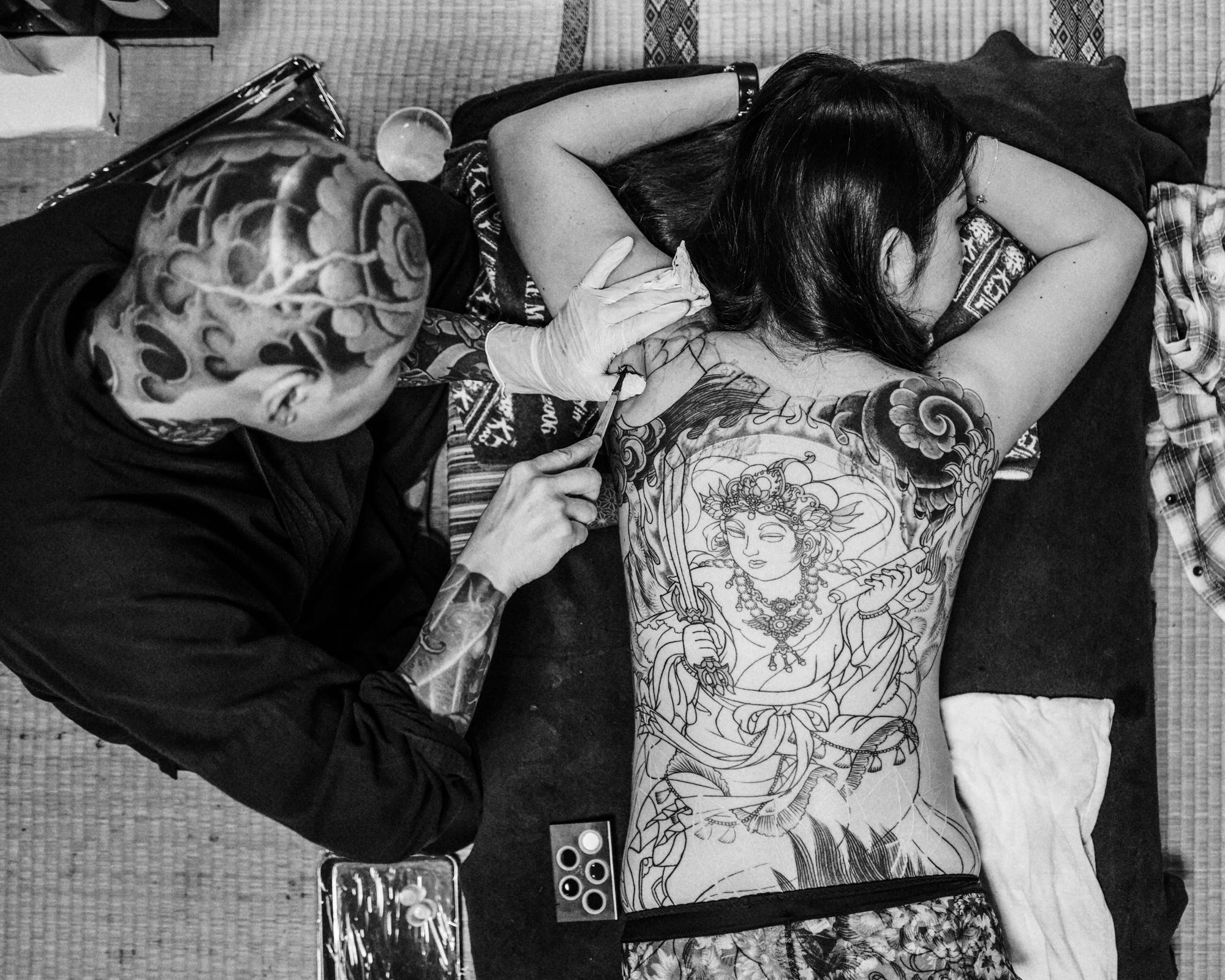
I put the cart before the horse in my first essay on tattooing in Japan, beginning with history, context and the deep connection to Japanese woodblock printing. Important, yes, but not the door through which I entered. That came through a tattoo artist named Horiren 1st.
Her studio is in Warabi, on the edge of Saitama, a working-class suburb with little to distinguish it from countless others ringing Tokyo. Not far from the train station, you turn down a narrow side street and find a small house, otherwise nondescript save for the Māori-inspired motifs painted across the exterior walls, a nod to Horiren’s interest in tattooing traditions from around the world.
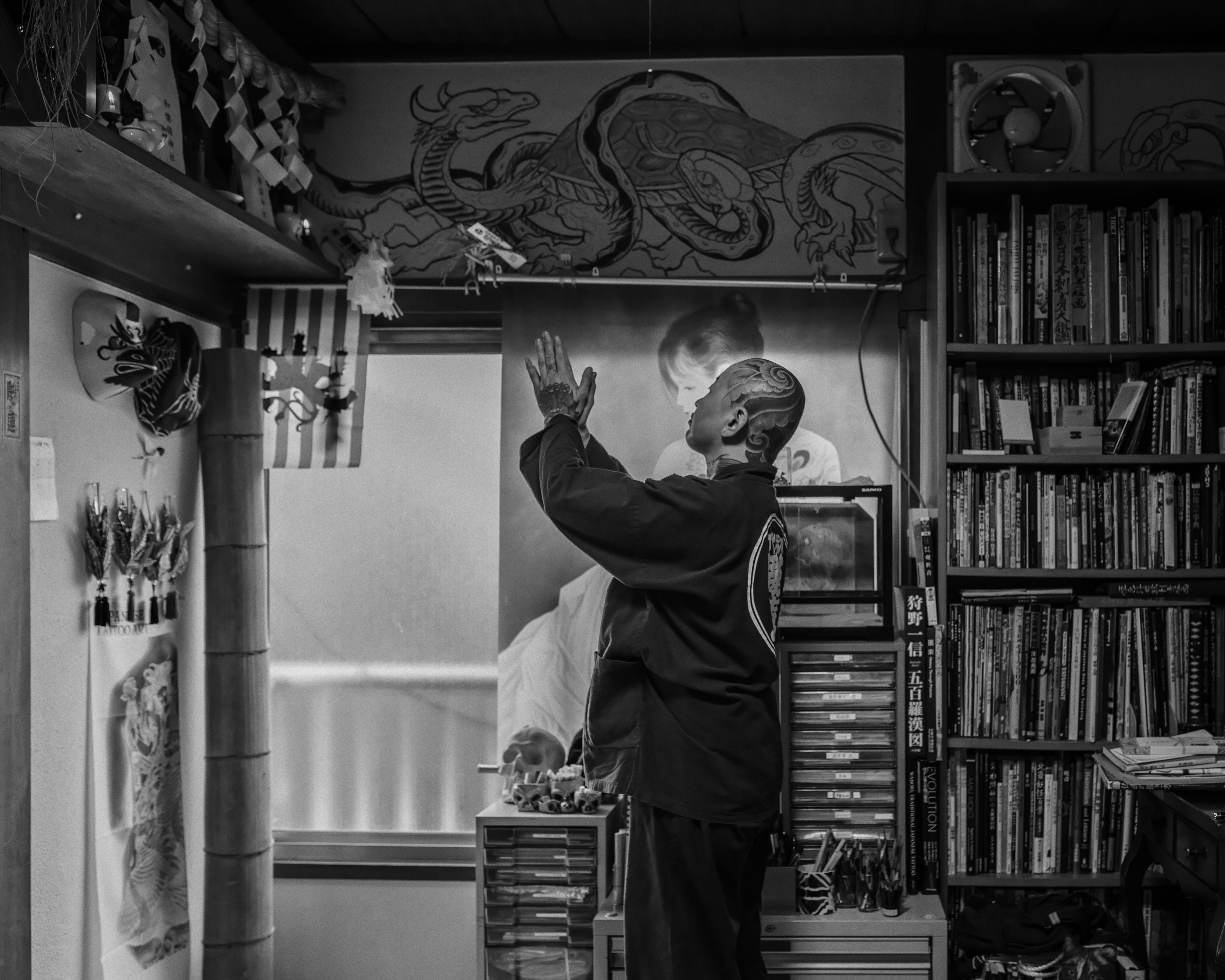
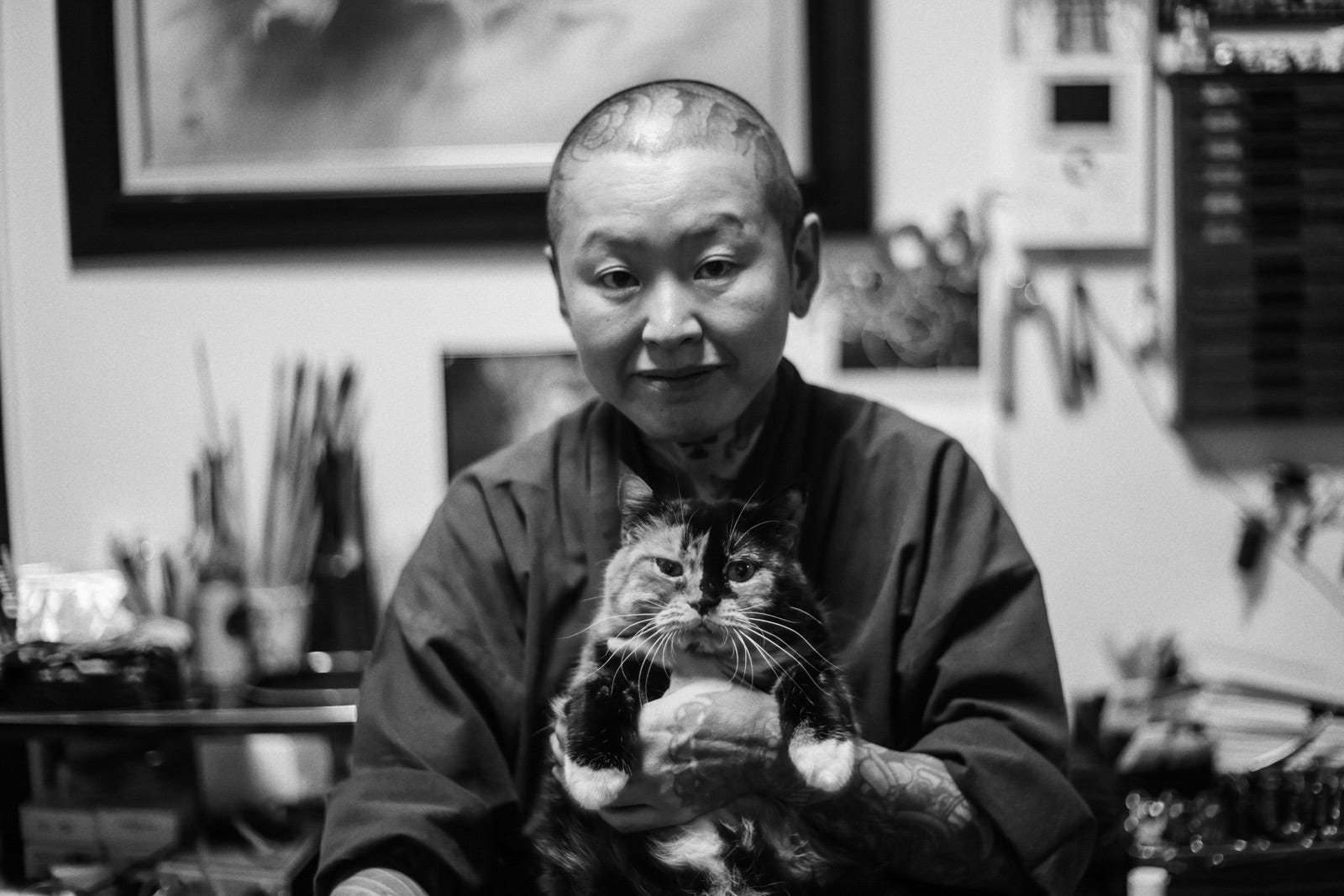
Inside, the space is quiet in a way that takes a moment to register, at least in comparison to the tattoo parlors I had visited in places like New York or Havana. When Horiren is working by tebori, there is no mechanical hum of the tattoo gun, only the soft, repetitive tick, tick, tick of needles entering skin by hand. Her cat, Necoste, wanders through the room, only to be shooed away when he gets too close to the action. A small television murmurs in the background, an everyday soundtrack of Japanese daytime talk shows that sits in strange contrast with the concentration and almost ceremonial feeling in the room.
It was a far cry from the other ateliers I had spent time in across Japan, where objects are forged, formed or woven through a series of well-choreographed steps. Further still from the places I had come from before that: a corporate office, a trading floor, rooms defined by speed, intensity and the illusion of control.
Horiren is my entry point to a world few people see up close—my guide, a friend and the only person outside of a medical setting who has ever put a needle into my skin.
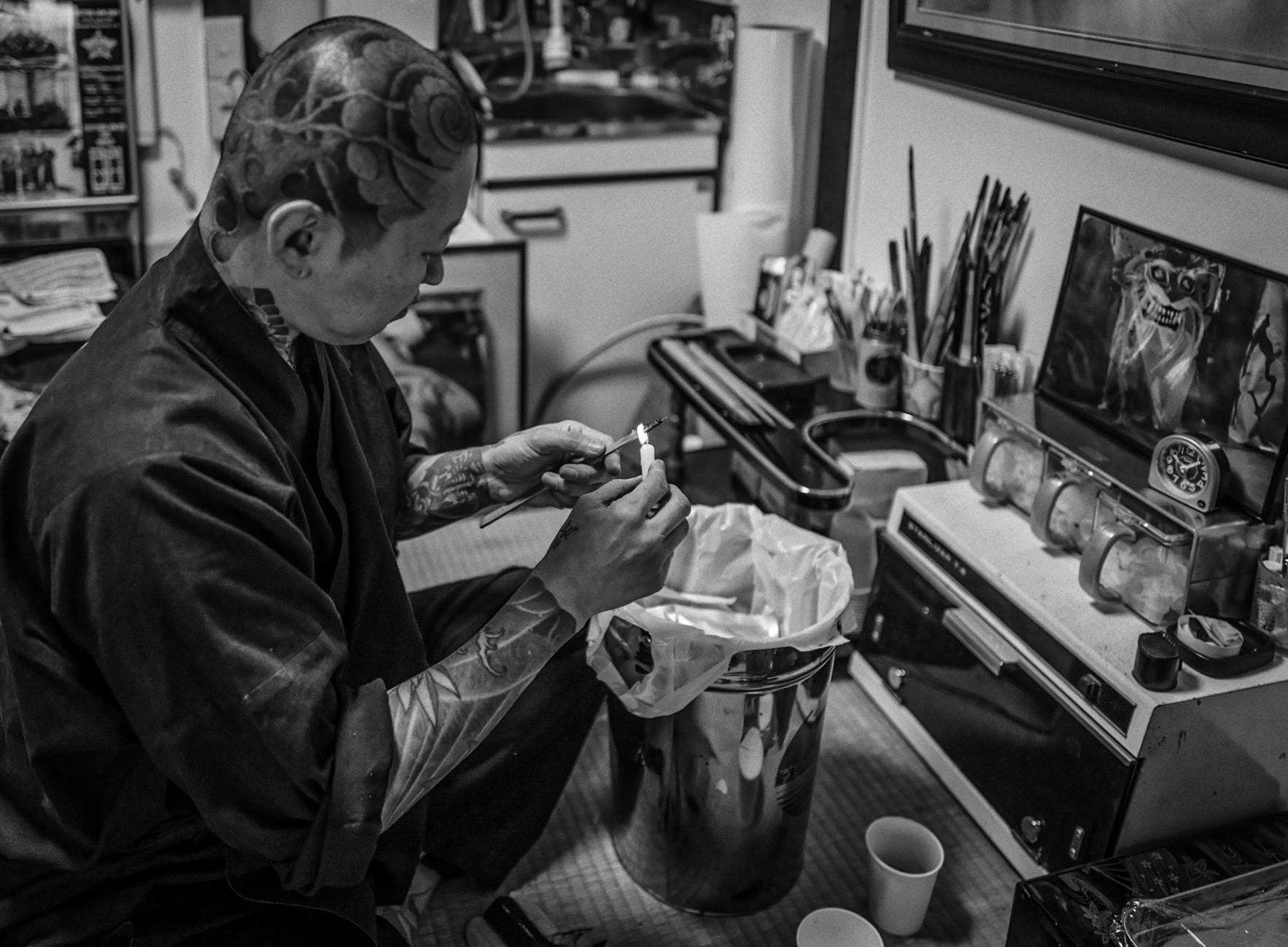
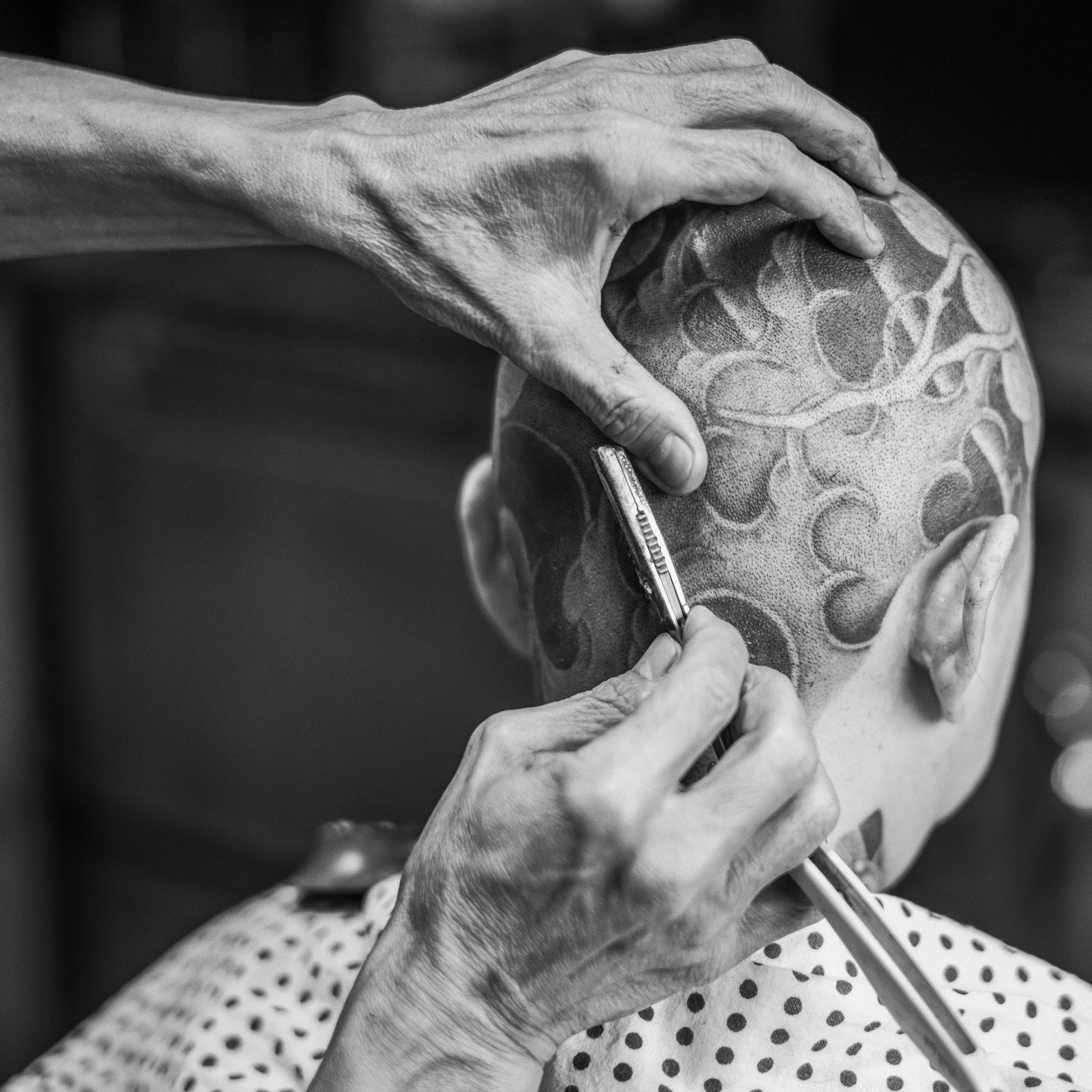
I had seen photographs of her before we met, and she is undeniably striking: small, monk-like (she is now an ordained Buddhist nun), her shaved head tattooed with waves and lightning. Still, it took nearly a year of back-and-forth before I was allowed into her studio with a camera. That first visit reset my understanding of what access and intimacy can mean in Japan, where so much still happens behind closed doors. I spent most of the day doing little more than watching.
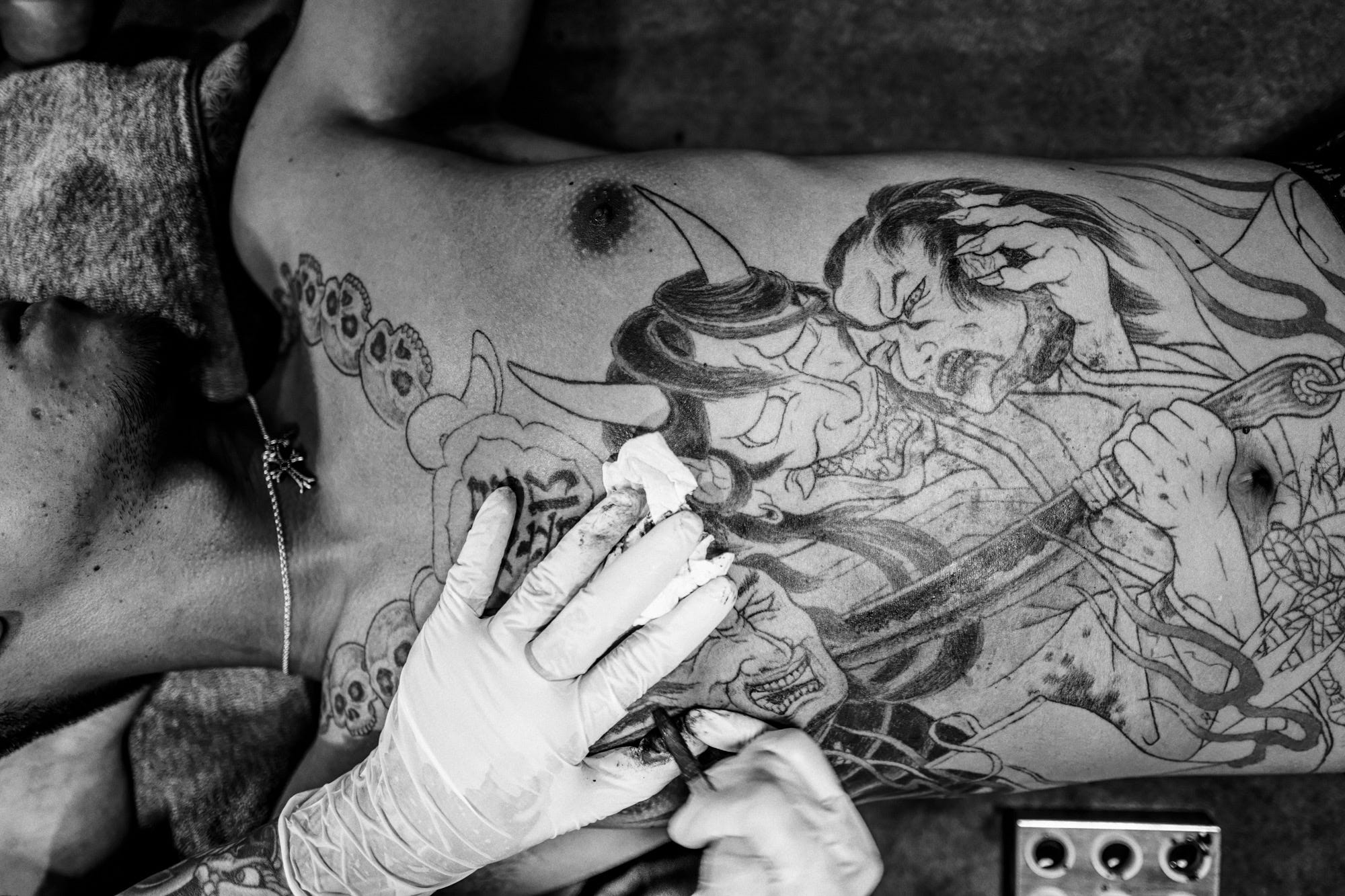
A young man bearing the inked amulet of a Tokyo crime syndicate lay back as Horiren finished work on his chest using shamisenbori, a rare manual technique practiced by only a handful of tattooers in Japan. The motif itself was equally visceral: namakubi, or severed heads. Later, a father wearing a full back-piece completed over many years by Horiren arrived with his daughter for her first tattoo: a snake and lotus on her thigh.
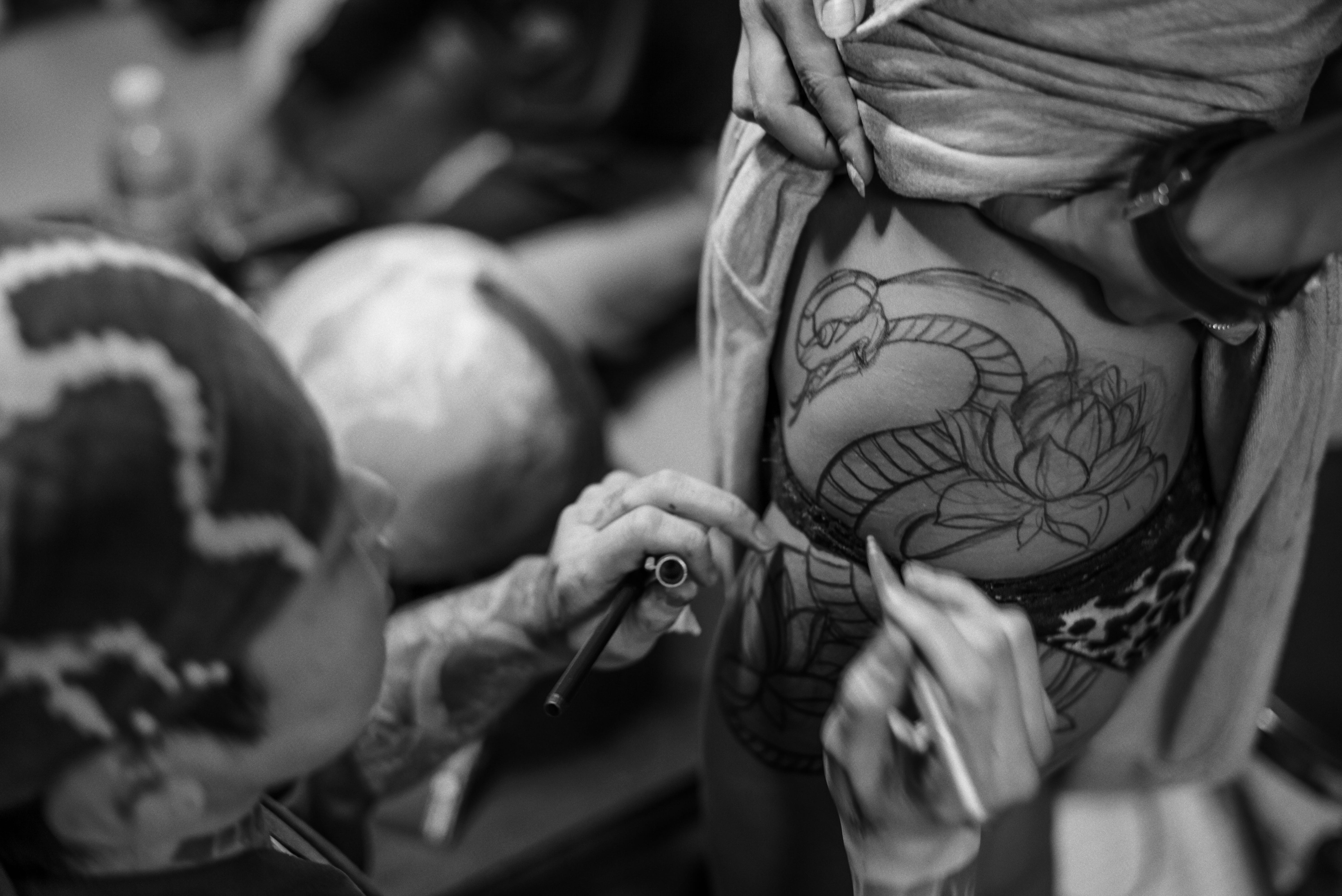
“Her mom’s going to kill me,” he said, half-joking.
Horiren smiled and got to work.
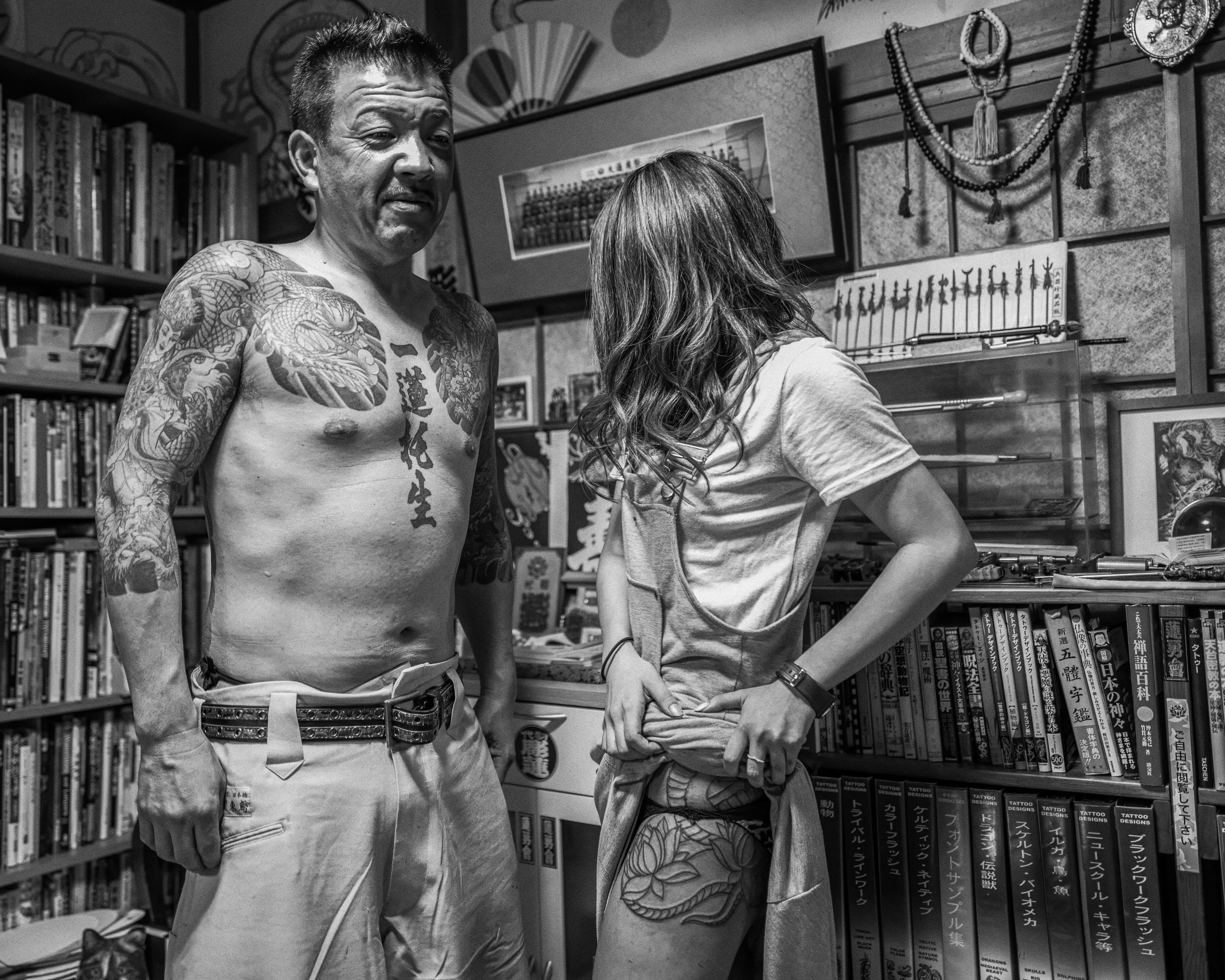
I left buzzing, aware that it was a privilege to have been there at all. I came back almost immediately, this time without a translator, and again stayed the entire day. Horiren even brought me along to her barber appointment for a head shave. From there, I kept returning whenever I could.
Despite the language barrier, we fell into an easy friendship that has included some of my most memorable experiences in Japan: joining her team at Sanja Matsuri and carrying a multi-ton mikoshi through the streets of Tokyo; late-night gatherings where clients stripped down to reveal full-body tattoos; even a strangely innocent visit to what was described as an “old-lady strip club” on one of my birthdays. And then there were the long, silent hours spent together as she worked on my own body, something I never imagined for myself.
Even then, it took years before she sat for a proper interview. When she finally did, in 2019 for the London-based magazine Huck, we spoke for nearly eight hours through an extraordinarily patient friend who translated for us. Rather than reproduce that article here, I returned to those conversations and tightened them against the story I had already told, filling in what matters most.
Tattooing, Horiren told me, was the first thing she had ever chosen freely. Everything before it had been shaped more by necessity than desire.
She grew up in Kisarazu, in Chiba Prefecture, in a family that ran multiple businesses, from farming nori to repairing motorcycles. Her parents were strict, almost militaristic. Although she showed artistic talent early, her father did not believe art could provide a living. Determined to make her own way, she saved enough money to attend design school in Tokyo without her parents’ support.
She went on to work as both a graphic designer and mural artist, contributing to projects including the wildly popular Dragon Ball series before walking away to pursue tattooing.
The turning point came during a trip to Australia. After receiving several tattoos from flash sheets, she found herself in a Sydney pub speaking with a man who proudly showed her a design identical to one on her own body.
“I thought, ‘Holy fuck, I have the same tattoo as this guy?’”
On the flight home, she made a decision: she would become a tattoo artist and would only create original work.
That choice came at a cost. She did not tell her father how she was earning a living until she was thirty-three, leading to a rupture that lasted for years and only began to heal after her mother’s illness and death. Near the end of her life, her mother offered a simple form of permission: if you believe in what you are doing, that is enough.
The first time Horiren was properly paid for tattooing, the client was heading to prison. He wanted to be tattooed before he went inside and paid her well. The exchange stripped away any remaining romance. This was not about taste or trend. It was about marking a threshold.
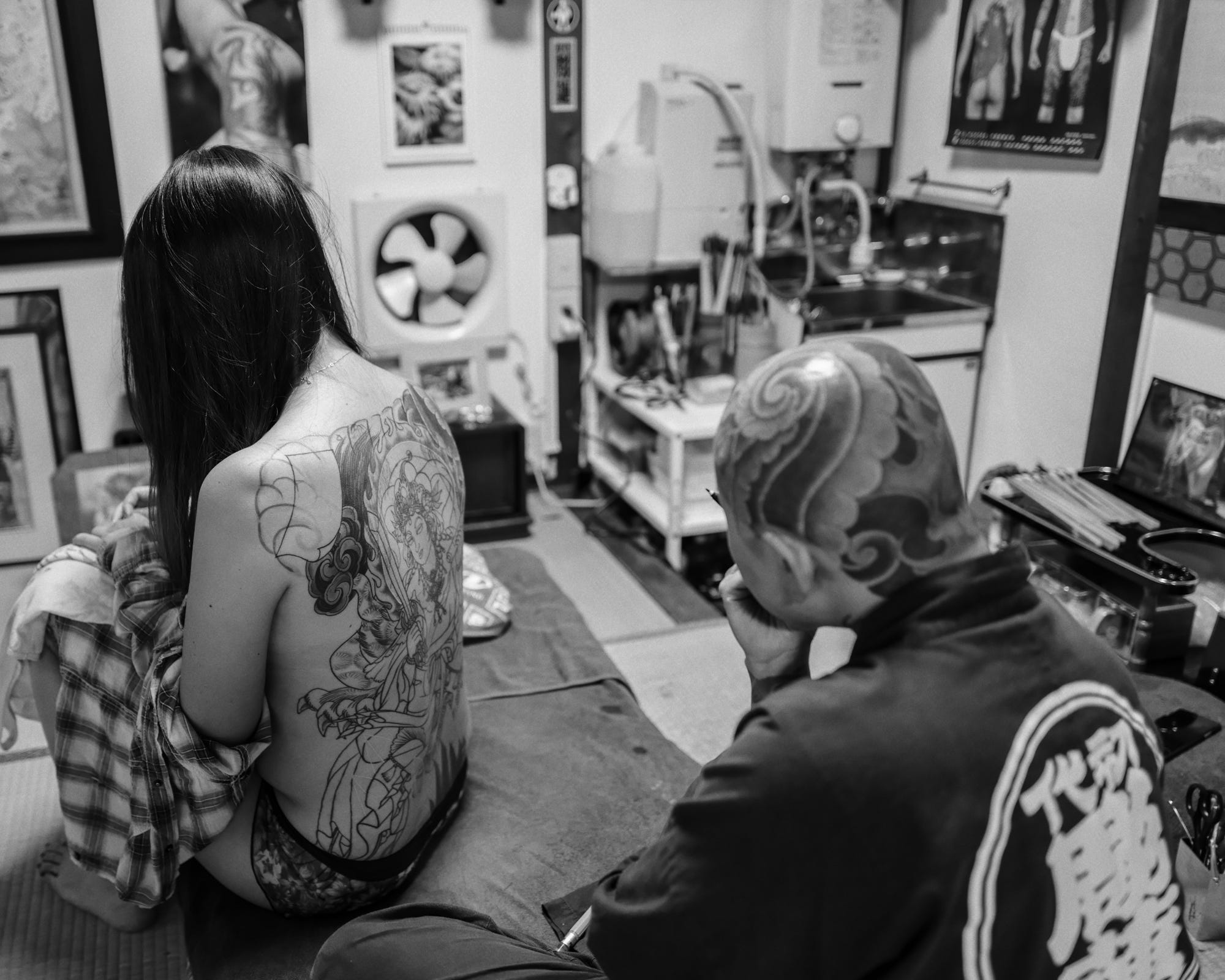
One of the clearest distinctions Horiren makes is between art and craft. The artist, she says, works for themselves. The craftsperson works at the behest of another.
Tattooing, in her view, belongs firmly in the latter category.
Her responsibility is not self-expression so much as an obligation to the person in front of her and to the image they will live with long after she is gone. As she puts it, getting tattooed is “like buying a house”—a commitment that deserves time, seriousness and care. Originality matters, but it is secondary to technique and execution.
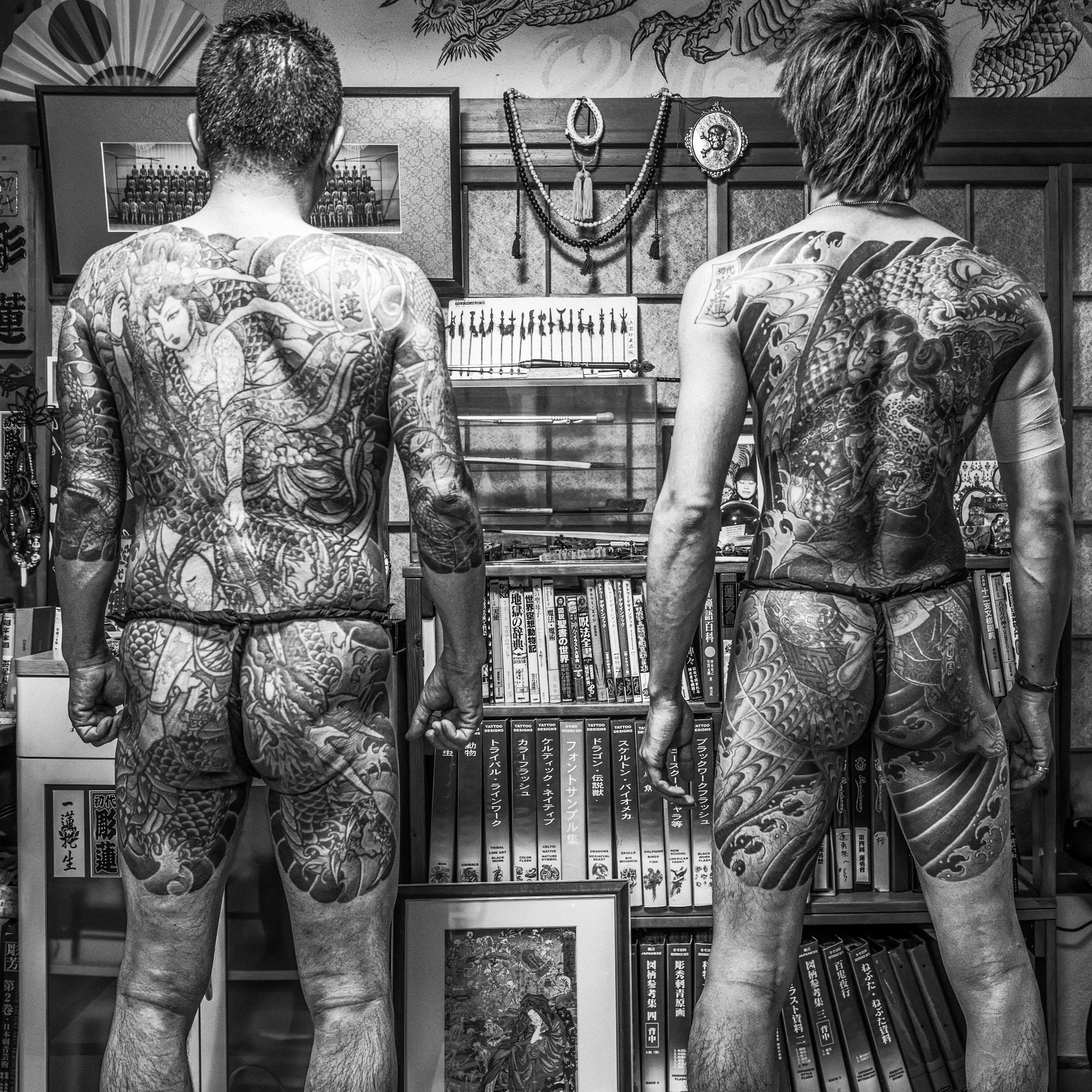
She did not set out to focus exclusively on traditional Japanese imagery. For years, she did whatever came through the door: skulls, tribal designs and biker motifs. This was less a matter of ideology than economic survival.
As word spread, low-level yakuza began to appear, first attempting to shake her down, later requesting work. Large traditional pieces followed. She learned the iconography the same way she learned everything else: by listening closely and taking responsibility for what she did not yet know. “My clients were my teachers,” she told me.
In many ways, Japanese tattooing is a direct continuation of the ukiyo-e tradition. The same verb, horu, is used for both carving woodblocks and tattooing the body. Motifs once cut into cherry wood and printed on paper by Hokusai and Kuniyoshi are translated instead onto living skin. However enduring they may appear, they are carried by a body that, like everything else, is just passing through.

Tebori, which the phrase “stick and poke” grossly oversimplifies, came later still.
Without a master to apprentice under, Horiren learned by being tattooed herself, watching closely and paying attention to technique. In effect, her own body became both sketchbook and classroom. She practiced linework and shading on her arms and legs.
Tebori is slow, physically demanding and unforgiving. By most estimates I have heard, a tattoo gun is three to four times faster. The results are different as well: less mechanically uniform, more painterly, at times almost three-dimensional.
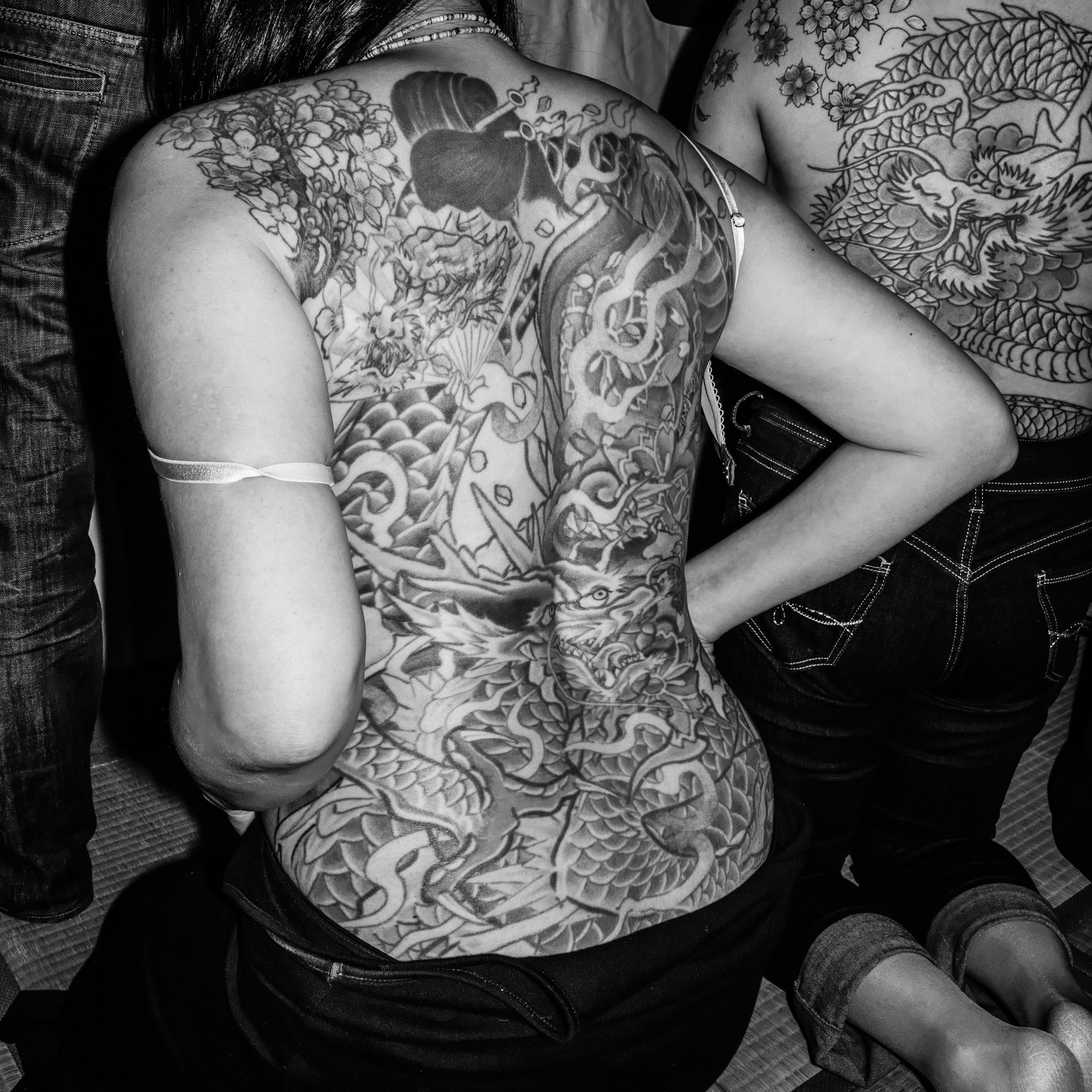
Horiren never insists on the technique. She is perfectly happy to use a machine. All of the tattoos she has done on me, however, have been made by hand.
The technique serves the work, not the other way around.
Traditional Japanese tattooing is not designed to accommodate isolated fragments or mixed motifs in the way many Western tattoos do. The body is treated as a single, continuous field.
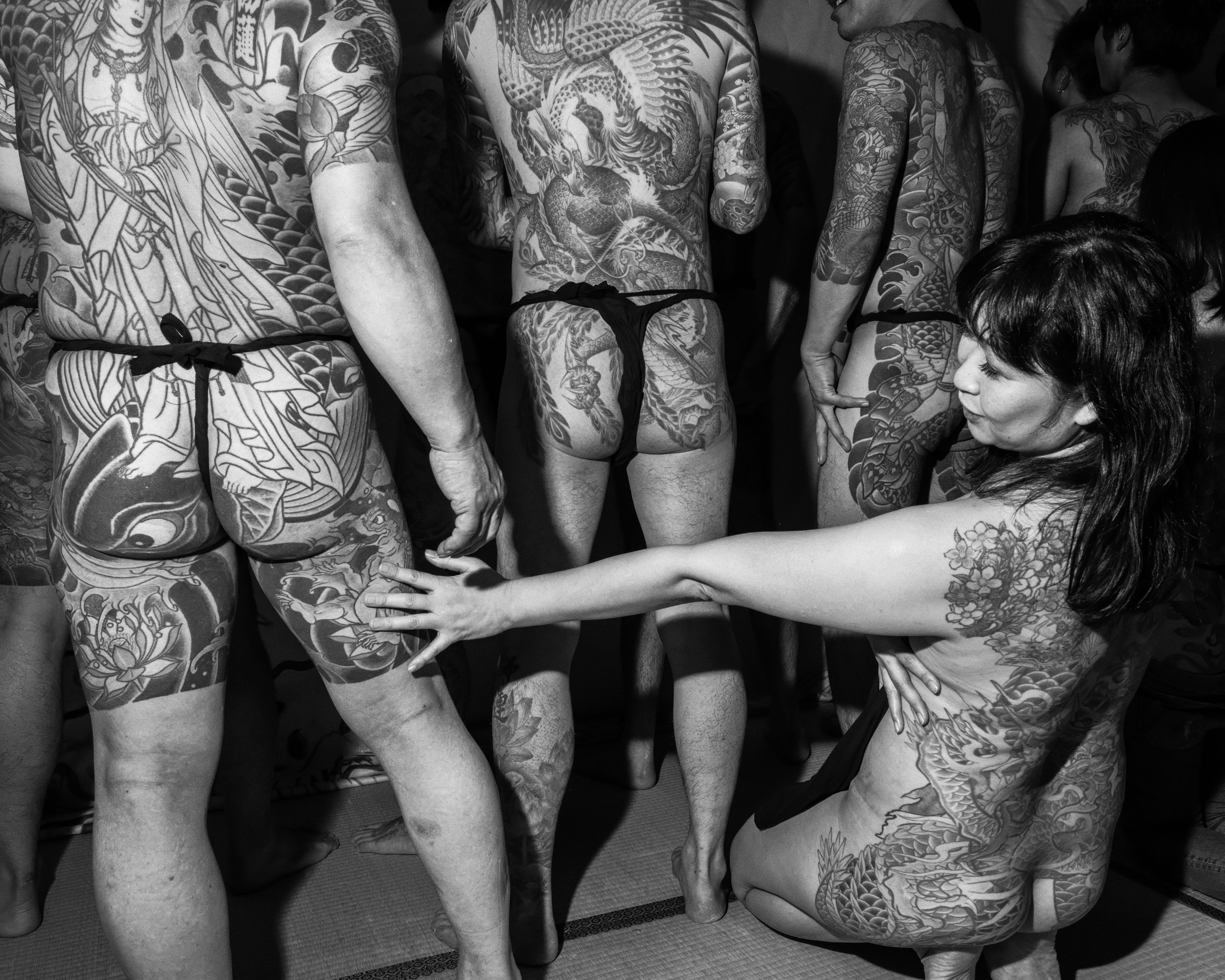
Horiren compares it to a kimono: conceived as a whole, not assembled piece by piece.
The work must also resolve through movement. A tattoo that only works when standing still has failed. Visibility is incidental. The true audience is the person carrying it and those closest to them.
After the earthquake and nuclear disaster of March 11, 2011, Horiren stopped tattooing altogether and spent a year volunteering in the affected regions.
One of her earliest clients died during that period. At his cremation, she watched the dragon she had tattooed disappear with his body.
Tattooing suddenly felt inadequate in the face of so much loss. As she put it, she was Japanese first, a tattoo artist second.
She returned to tattooing only after meeting a young man in Iwate Prefecture whose town had been almost entirely erased by the earthquake and tsunami; 700 of its 760 homes were destroyed. He had lost nearly everything, yet believed that a tattoo might give him the resolve to continue.
That encounter clarified something essential for her.
Tattooing is not an argument against impermanence.
It is one way of meeting it.
Fascinating, Mike...thank you for bringing her world into ours.
I love this: "The artist, she says, works for themselves. The craftsperson works at the behest of another." I would love to run into her on the street so I could bow to honor her wisdom.